Translate

Wednesday, 28 January 2026

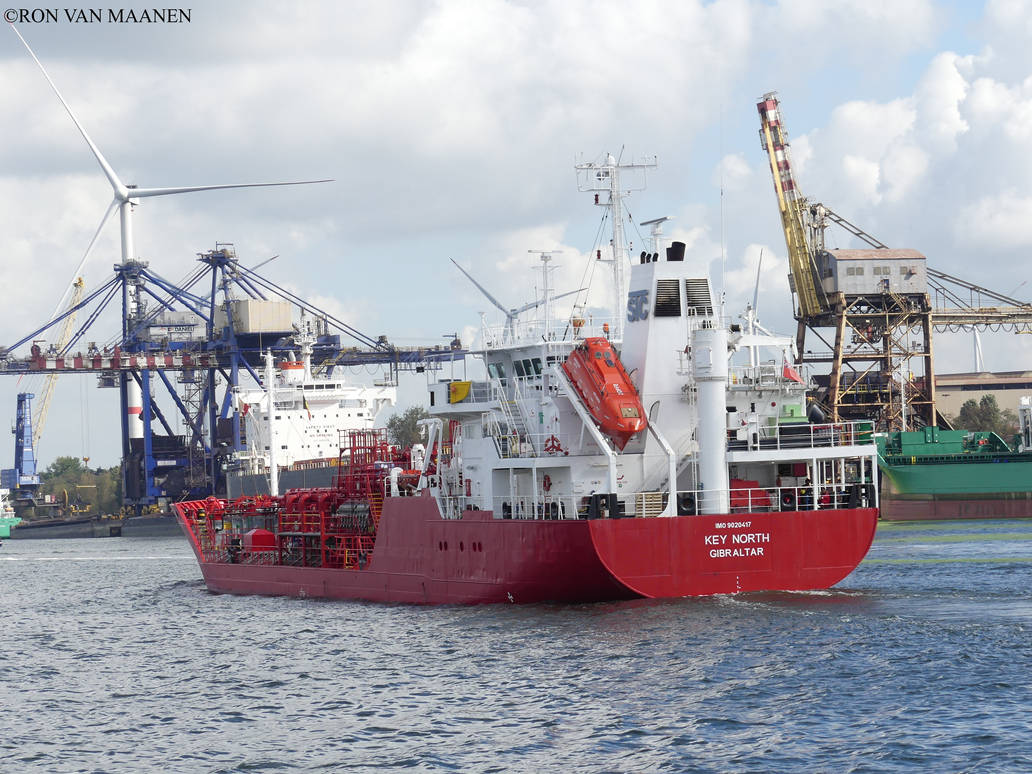
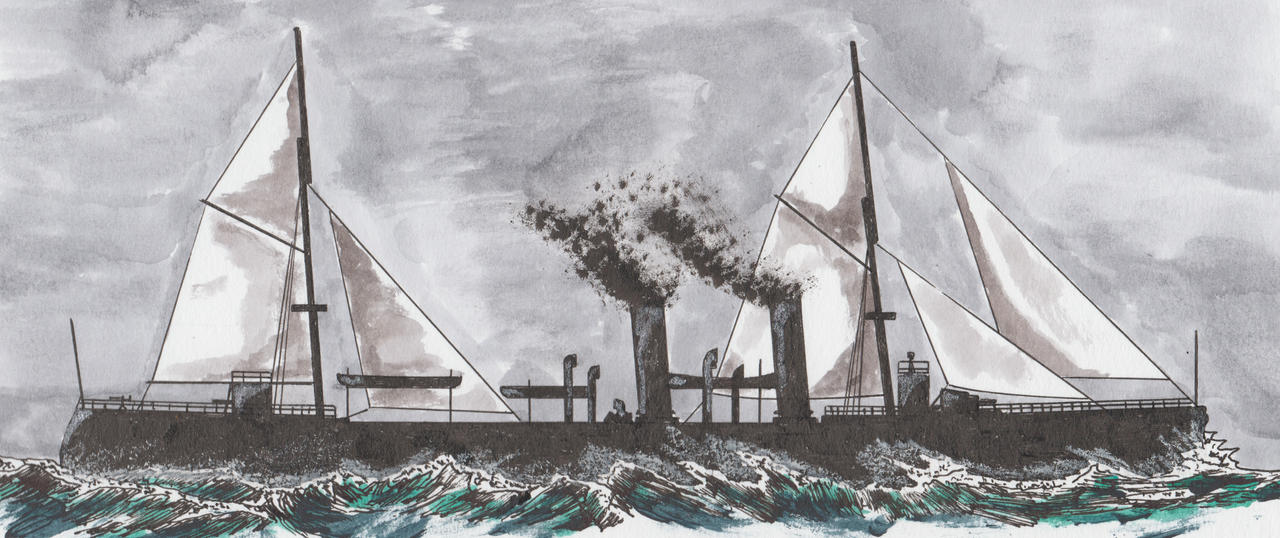
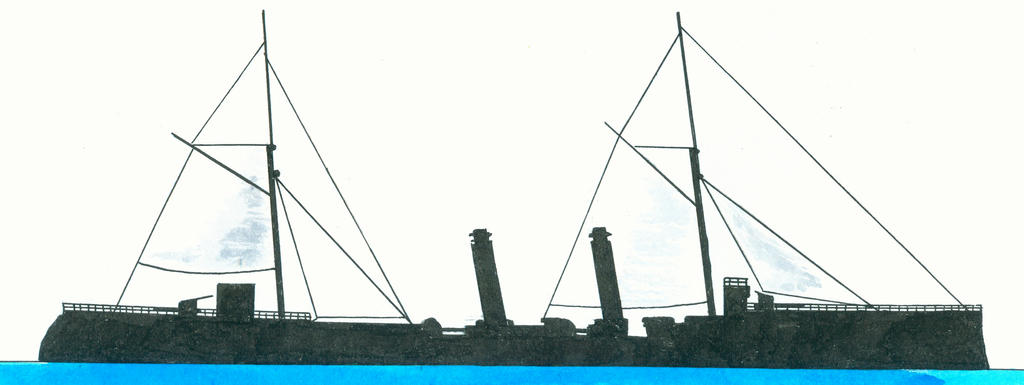
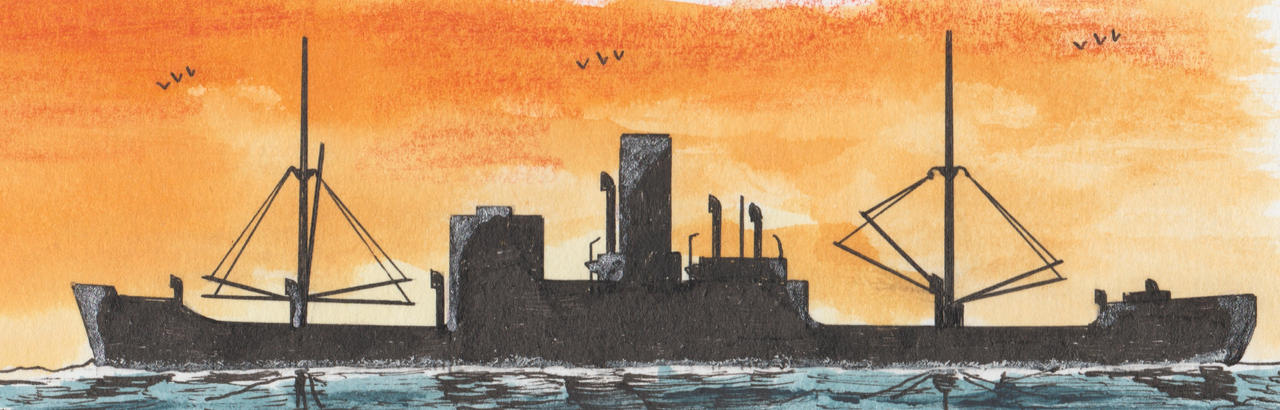
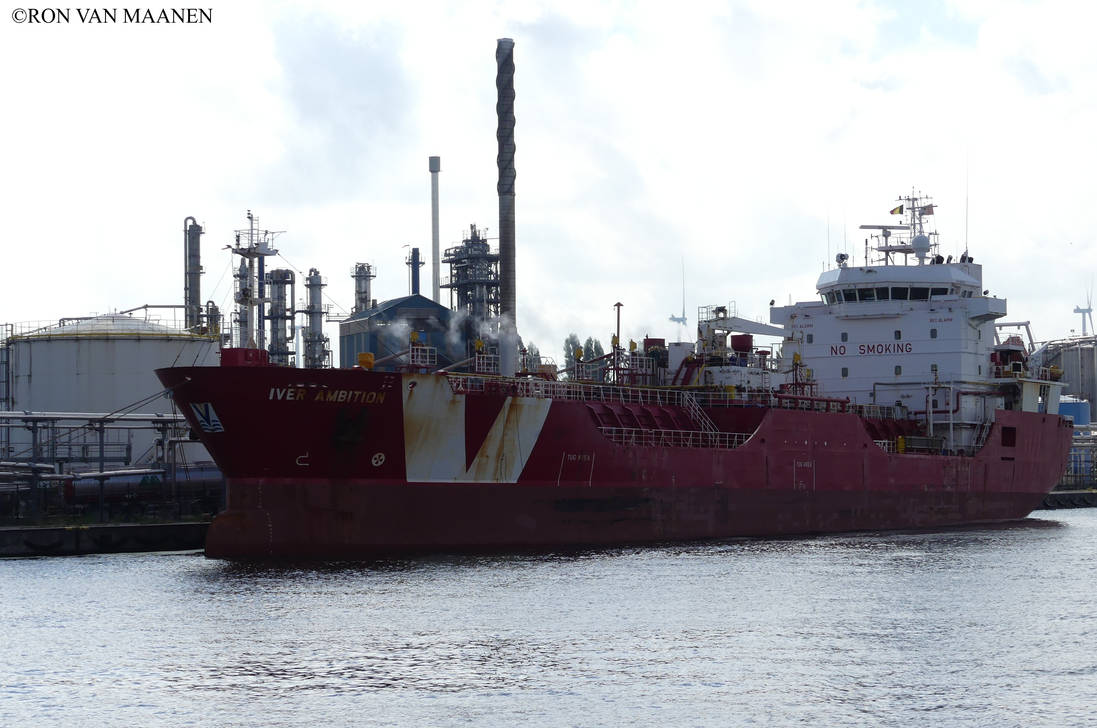
British mine countermeasures vessel HMS Cattistock M 31 1979-


North Sea off Zeebrugge, Belgium 26 January 2026

Homeport HMNB Portsmouth, England, IMO 4906599, MMSI 2358000. Part of Hunt-class. Building ordered on 29 January 1979, laid down by Vosper Thornycroft on 20 June 1979, launched on 22 January 1981 and commissioned on 5 March/16 June 1982.

Patent of a ball-proof vessel of Thomas Gregg of Pennsylvania, USA dated 19 March 1814

Thomas Gregg’s invention. National Archives USA NAID 149285828

CSS Virginia. ©Warshipsresearch.blogspot.com

Thomas Gregg was of the Fayette Company. His design consisted of a flat upper deck with sides and ends slooping outwardly to the waterline. The upper part of the vessel was very broad overhanging the submerged portion and so protecting trhe rudder and means of the propulsion. The gundeck was nearly level with the waterline with gunpots cut in the inclined sides. The vessel was to be covered with copper or iron. His widow asked later renewal of his patent for ball-proof for iron-clad vessels. Knight wrote that this floating battery resembled very much the Confederate ironclas CSS Virginia (the former Merrimac) or some of the USS ironclads. The exposed parts were to be covered by copper or iron. He doubt if there was ever a vessel built on Gregg’s plan, but the invention seems to embody features later used by the Confederate and USS navies and using steam propulsion for ironclad floating batteries. Harpers Weekly wrote that Greeg was a quaker who thought that the best way to keep men from fighting is fighting was preventing they got hurt. Between 1814 and 1850 he tried to get recognition from the US government for his design. It was tested by a Dupont of Deleware with a gun with success and even Congressmen were pleased with the principle. Gregg spent thousands of dollars in tests and experiments without getting an order.

Sources

Proceedings of the United States Naval Institute. Volume V. Annapolis, USA 1879.

The miscellaneous documents of the Sentae of the United States. Third session of the forty-sixth congress, and the special session of the forty-seven congress. 1880-1881. Washington, 1881.

Naval Armament: Pamphlet Collection.

Edward H. Knight. Knight’s American Mechanical Dictionary. New York, 1874.

Harpers Weekly. Volume XLIII, 1899.

National Archives USA/ Record Group 241: Records of the Patent and Trademark Office. Series Restored Patent Drawings/ NAID 149285828

Russian Baltic Fleet wanted two more forts to built west of Krasnaya Gorka in 1924

The Commissioner of the United States at Riga, Latvia wrote on 21 May 1924 to the Secretary of State at Washington that the staff of the Russian Baltic Fleet proposed two more forts of the south coast to the west of Krasnaya Gorka for emplacing 2 socalled ‘dagger’ 30.48cm/12” ‘vzovid’ with each vzvodi counting 2 guns. The commission for investigation just went away.(1)

Note

1. Krasnaya Gorka is a coastal artillery fortress situated on the southern shore of the Gulf of Finland opposite of Kotland Island and the homebase of the Russian Baltic Fleet at Kronstadt. The origin dated from the 18th Century and it was modified in late 19th-begin 20th Century with 12” guns mounted in concrete casemates.

Source

Records of the Department of State Relating to Internal Affairs of Russia and the Soviet Union, 1910-29. Naval Affairs, Navy, Navy Vessels: 861.30.(861.31 Naval Maneuvers; 851.32 Personnel); 861.33 Movements of Navy Vessels; 861.34 Equipment and Supplies): 861.39 - 861.345. Micro film 316 roll 92. 

American dazzle camouflage Type 1 Design F dated between 1917-1919

Source National Archives (USA). Starboard. NAID 84785662.

Source National Archives (USA). Port. NAID 84785664.

Croatian customs motor boat Senjanin Ivo in 1943

According to a letter dated Zagreb 4 November 1943 were the vessels of the customs service in April 1941 mainly at Split or other Croatian harbours under Croatian flag until July 1941 when the Italian took over the vessels for war purposes. Efforts to keep at least some of the vessels for security reasons off the Croatian coast were denied by the Italian government claiming the vessels were taken as Yugoslavian prizes despite during 4 being months Croatia-flagged and Italy would protect the Croatian coastline. Gross register tonnage 36 tons.(1)

Note

1. The Independent State of Croatia was established after Yugoslavia was captured by Italy and Germany on 10 April 1941. This state was first an Italian Protectorate between 1941-1943 and then a German puppet state between 1943-1945.

Source

Bundesarchiv TM-12-II/4

Philippine escort vessel (ex-PCE 897 1941-1948) Iloilo 1948-2016

Pangasinan. ©Warshipsresearch.blogspot.com

Former US PCE 842-class patrol craft, in, Philippine naval service Miguel Mlavar-class corvette succeeded by Rizal-class. Laid down by Willamette Iron and Steel Works, Portland, Oregon, USA on 16 December 1942, launched on 3 August 1943, commissioned on 6 January 1945, handed over to the Philippines on 2 July 1948 and decommissioned in 2016. 

Construction status of the German submarine U 1237 in July 1944

List of planning with deadlines for new construction of warships by German shipyards in July 1944. Type IXC/40. Deutsche Werft, Hamburg, Germany. Yard number 400. Date building ordered 14 October 1941. Date completion open. Remarks none.

Source

Deutsches Historisches Institut Moska. Records 500 findbuch 12453-file 147. 

American dazzle camouflage Type 1 Design D between 1917-1919

Starboard. NAID 84785666. Source National Archives (USA)

Port. NAID 84785668. Source National Archives (USA)

Construction status of the German submarine U 1236 in July 1944

List of planning with deadlines for new construction of warships by German shipyards in July 1944. Type IXC/40. Deutsche Werft, Hamburg, Germany. Yard number 399. Date building ordered 14 October 1941. Date completion open. Remarks none.

Source

Deutsches Historisches Institut Moska. Records 500 findbuch 12453-file 147.

Japanese minelayer Nasami 1933-1944

Natsushima. ©Warshipsresearch.blogspot.com

Part of Natshima-class consisting of the Nasami, Natsushima both Project H5 and Sarushima Project H5B. Ordered under the 1931 Programme. Design was based on that of preceding Tsubama-class succeeded by Sokuten-class. Laid down by Harima Zosen on 19 January 1933, launched on 26 March 1934, completed on 20 September 1934, sunk during an Allied air atttack at Rabaul, East New Britian, Papua New Guinea on 1 April 1944 and stricken on 10 April 1944. 

American whaler Mary and Martha visited Bay of Islands, New Zealand in 1836

Arrived on 12 September 1836, ship, name master Coffin, tonnage - tons, belonged to USA, active in the sperm oil fishery, cargo 1,400 barrels oil

Source

Accounts and papers of the House of Commons: seventeen volumes. Colonies; Emigration; Australia; Prisons, West Indies;etc. Session 15 November 1837-16 August 1838. Vol. XL. 

Dazzle camouflage cargo ship dated between 1917-1919

Source National Archives (USA). NAID 6997120

British whaler Beaver in 1785

Master Kelly. Of London. Lost, crew saved and on board of the Aberdeen.

Source

The Scotts Magazine. Vol. XLVII. Edinburgh, 1785. 

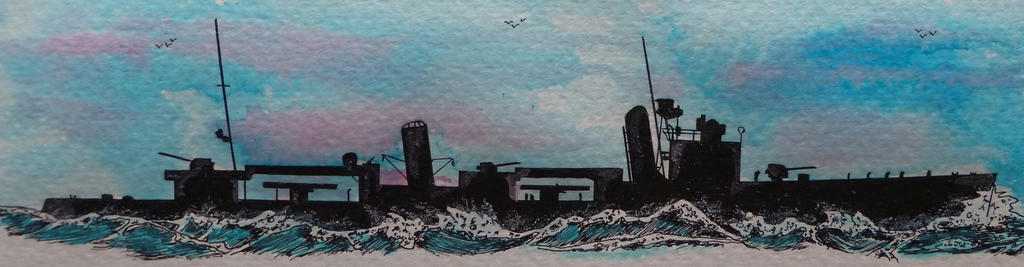
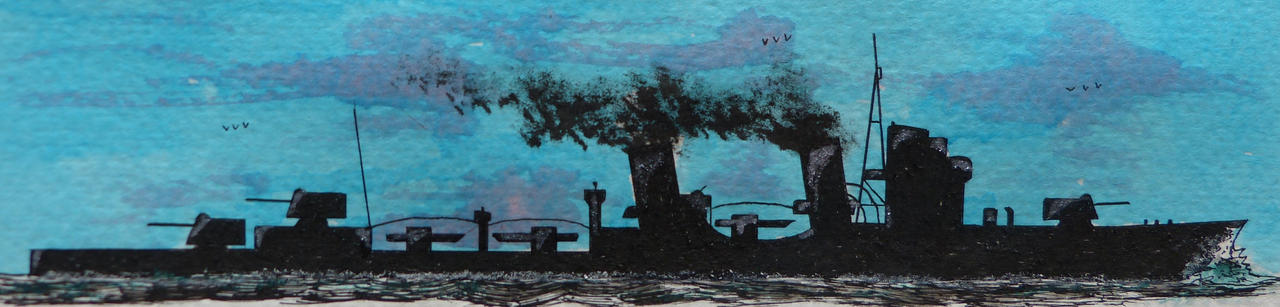
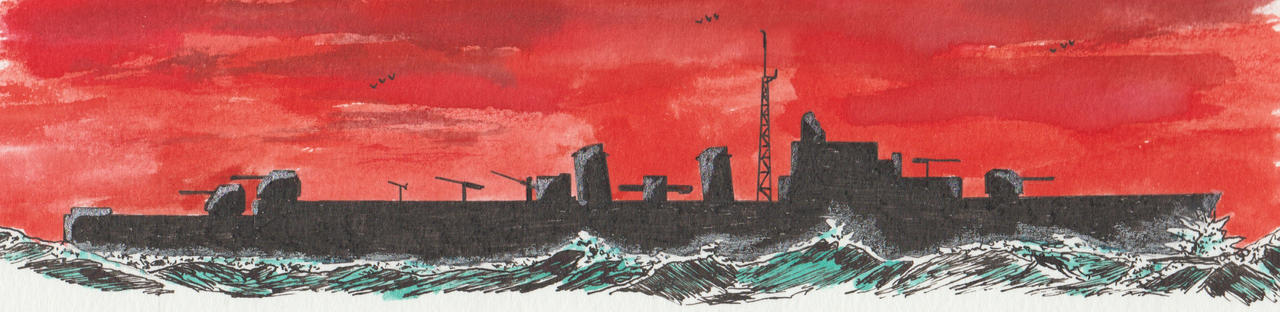
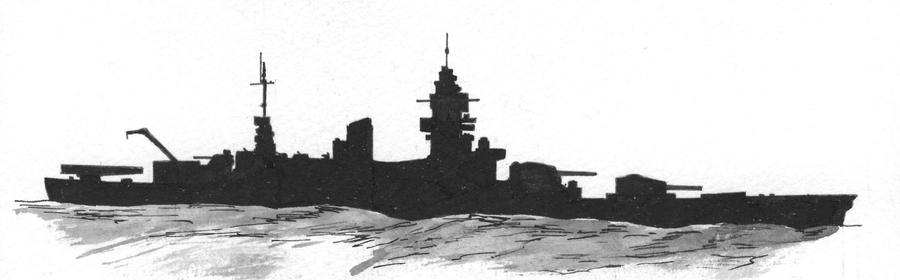
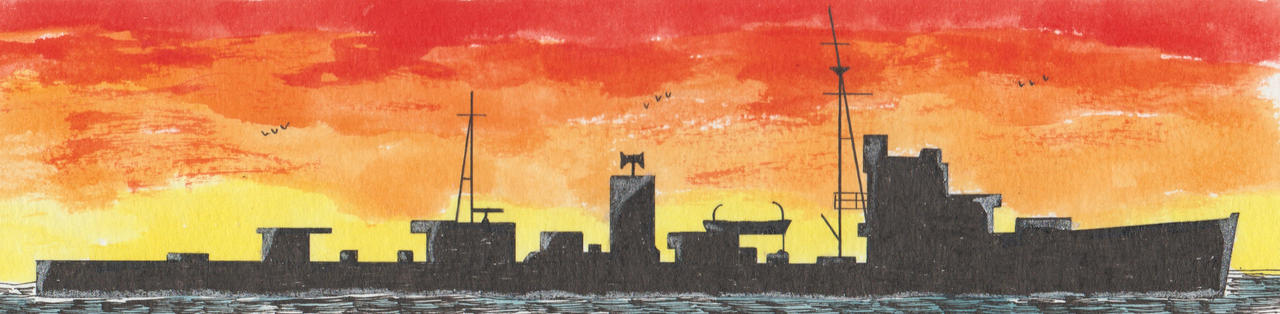
British destroyer HMS Winter 1918

Seymour, Parker-class flotilla leader. ©Warshipsresearch.blogspot.com

Sistership Veteran. ©Warshipsresearch.blogspot.com

HMS Amazon D39 (1925-1927). ©Warshipsresearch.blogspot.com

An Admiralty modified W-class destroyer ordered under the 14th War Programme . Of the 38 ships ordered were just 7 completed, the other 31 were cancelled. Preceded by S-and Parker-classes and succeeded by Thornycroft type destroyer leaders Ambuscade and Amazon. To be built by Swan, Hunter & Wigham Richardson, Wallsend,England. Order cancelled on 26 November 1918.

American whaler Audley Clark visited Floreana Island in 1834

According to a letter dated Floriana 1 May 1834 written by Joseph Villamil sent to the editors of the N.Y. Daily Advertiser visited the whaler Audley Clark of New Bedford, master Paddock, Floriana on 21 June 1834.(1)

Note

1. Floreana Island or Isla Floreana or Floriana is part of the Ecuador’s Galápagos Archipelago. In the past know and Mercedes Island/Isla Mercedes or Mascarenas, Santa Maria and Charles Island. Favorite stop for whalers for fresh water and food probably resulting in the destinction of some specias like the Floreana giant tortoise.

Source

The Sailor’s Magazine and Naval Journal. Vol VI ending August 183. New York, 1834. 

Dazzle camouflage. Direction of ship reserved about 1918

Source National Archives (USA). NAID 6997119.

American whaler Benezet visited Floreana Island in 1834

According to a letter dated Floriana 1 May 1834 written by Joseph Villamil sent to the editors of the N.Y. Daily Advertiser visited the whaler Benezet of New Bedford, master Pitman, Floriana on 30 May 1834.(1)

Note

1. Floreana Island or Isla Floreana or Floriana is part of the Ecuador’s Galápagos Archipelago. In the past know and Mercedes Island/Isla Mercedes or Mascarenas, Santa Maria and Charles Island. Favorite stop for whalers for fresh water and food probably resulting in the destinction of some specias like the Floreana giant tortoise.

Source

The Sailor’s Magazine and Naval Journal. Vol VI ending August 183. New York, 1834. 

Japanese auxiliary patrol boat No. 173 1945

©Warshipsresearch.blogspot.com

Type B ordered under the 1943-1944 Programme to be part of the coastal forces. Of the 280 ordered were just 56 laid down and even a less number finally completed when the Second World War ended. To serve as convoy escorts were the boats also fitted out with minesweeping gears. Based on a traditional wood built fishing boat. With a displacement of 238 tons and as dimensions 93.5 (between perpendiculars)-105. 3/4 (over all) x 20.2 x 7.75 feet. Geared diesel propulsion with 400bhp via one shaft and speed 9 knots. Crew numbered 26 men. Armament consisted of 2/4x1-2.5cm guns and 8-12 depth charges. Built by Tokushima. Completed on 26 March 1945, after striking a naval mine sunk on 29 March 1945, afterwards salvaged and broken up. 

Portuguese transport Nossa Senhora da Merces 1762-1768

Charrua, first mentioned in 1762, lost in 1768.

Source

A. Marques Esparteira. Catalogo dos navios brigantinos (1640-1901). Lisboa, 1976.

Dazzle camouflage. Side of steamship pointed to represent fleet of vessels going diagonally forward to starboard dated between 1917-1919

Source National Archives (USA). NAID 6997115. 

American diesel tug Spuda (1946) in 1966

Active on the Great Lakes system. Operated by Roen Steamship Company. Homeport Sturgeon Bay, Wisconsin, USA. Built in 1946. Steel made. Net register tonnage 13 tons. Dimensions 41.6 (register)-44.5 (over all) x 12.4 x 5 (light)-6 (loaded) and as highest fixed point above water (=light staff) 13. Feet. Horsepower 120 hp.

Source

Corps of Engineers US Army. Transportation Lines on the Great Lakes System 1966. Transportation series 3. 

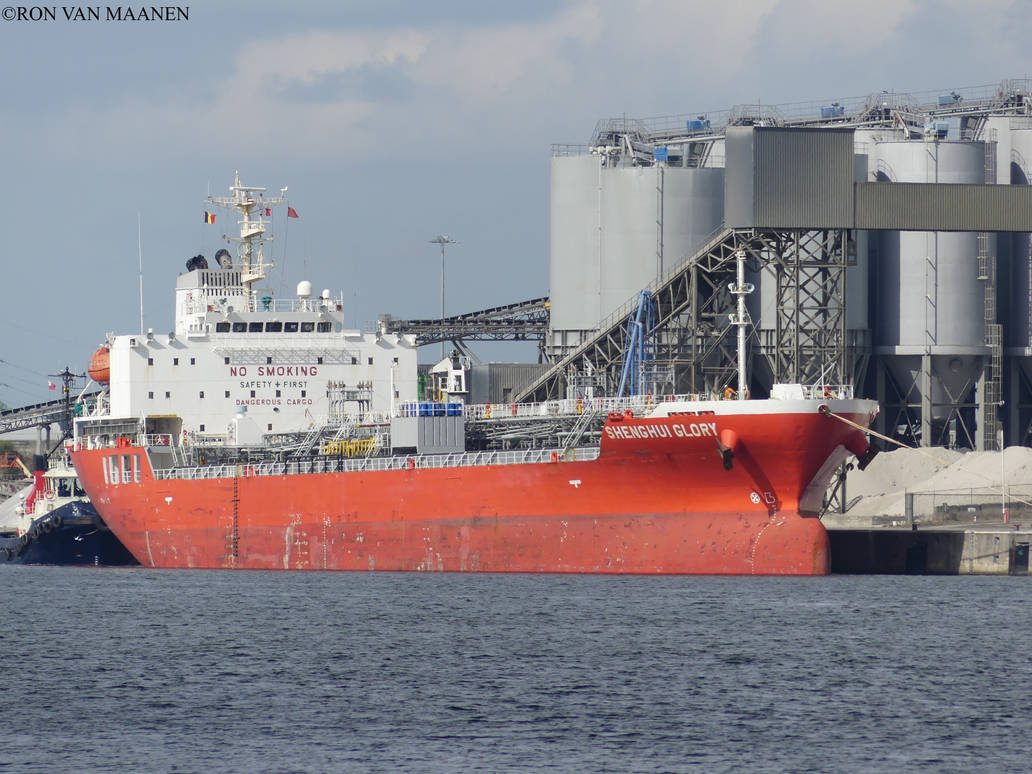
Swedish oil/chemical tanker Pacifico 2022-

Schelde off Vlissingen, Netherlands 24 January 2026

Sweden-flagged, homeport Donso, IMO 9876830, MMSI 266002000 and call sign SBKG. Owner Donso Shipping AB, Donso and manager Navix Maritime Chartering AB, Gothenburg, Sweden. Built by Wuhu Shipyard Co. Ltd., Wuhu, China in 2022. 

French galley Cotellas 1538

Captured by Andrea Doria in 1538.

Source

J. Vichot. Repertoire des navires de guerre français. Paris, 1967. 

Camouflage. Battleship disguised as an island 20th Century

Source National Archives (USA). NAID 6997114

Dutch East Indiaman Huys te Bergen 1674

Cat, E.I.C.-chamber Hoorn, built in 1674, dimensions 120 x 24½ x 121, heighta bove 5 feet.

Source

F.W. van Stapel. Beschrijving van de O.I. Compagnie. 

Tuesday, 27 January 2026

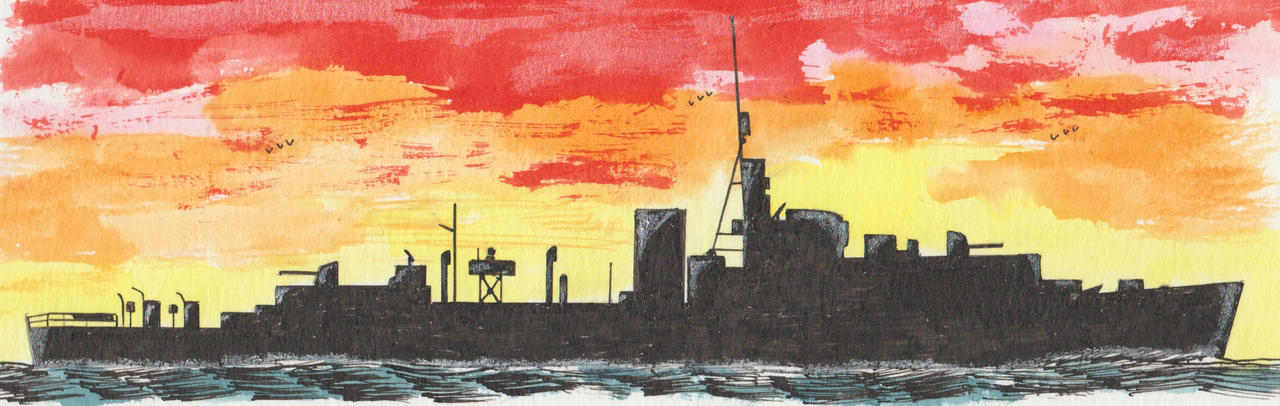
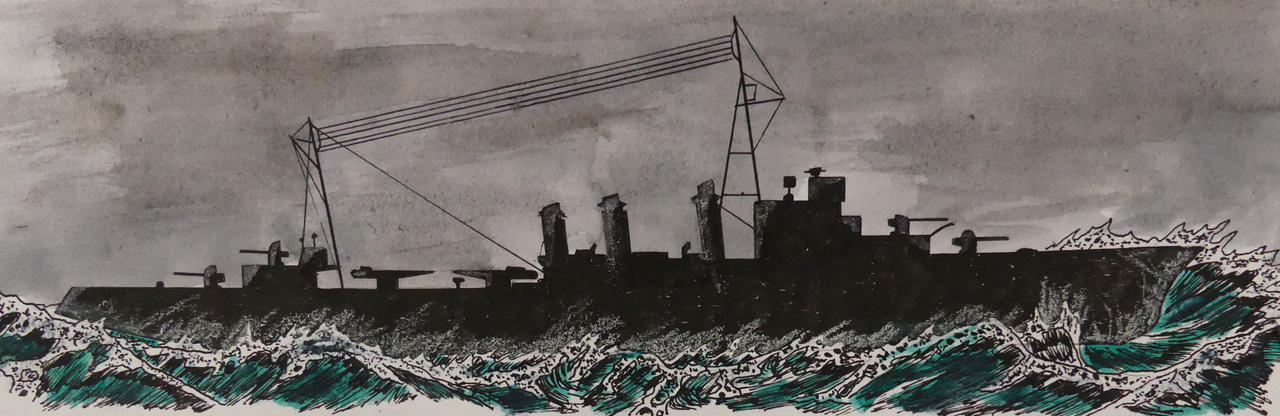
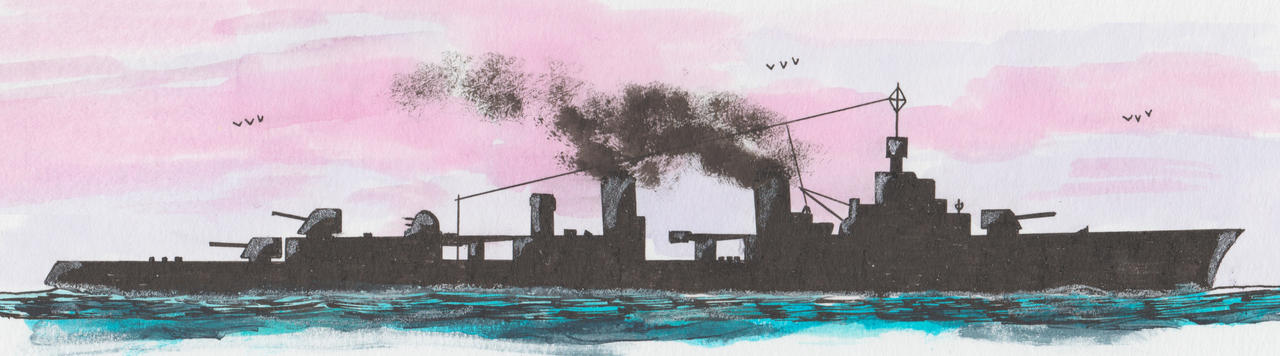
British light cruiser HMS Galatea 1933-1941

Leander-class. ©Warshipsresearch.blogspot.com

Arethusa-class. ©Warshipsresearch.blogspot.com

Dido-class. ©Warshipsresearch.blogspot.com

Part of Arethusa-class preceded by Leander-class succeeded by Dido- and Town-classses. Six were planned but just 4 completed and 2 cancelled. The cancelled Minotaur and Polyphemus were later ordered as part of the Town-class. Pennant 71. Laid down by Scotts Shipbuilding and Engineering Company, Greenock, Scotland on 2 June 1933, launched on 9 August 1934, commissioned on 14 August 1934 and sunk by the German submarine U-557 off Alexandria, Egypt on 14 December 1941. 

British dazzle camouflage Type 5 Design BX dated September 1917

NAID 56070465 Port

NAID 56070465 Starboard

Source

National Archives USA. Website claims Design, drawings B.X.

American Liberty cargo ship type EC2-S-C1 R.J. Reynolds 1944-

©Warshipsresearch.blogspot.com

Reciprocating propulsion. MCC contract number 15770. MCE hull number 2377. Builder’s hull number 163. Operator Black Diamond. Shipyard J.A. Jones Construction Co. Inc., Brunswick Yard, Georgia. Date contract 22 April 1943. Contracted delivery date 15 July 1944. Laid down on 19 August 1944. Launched on 30 September 1944. Delivered on 12 October 1944.

Note

1. EC=Emergency Cargo, 2=between 20,000-29,999 tons deadweight, S=single screw-C1=basic configuration.

Source

List of completed contracts for the U.S. Maritime Commission (USMC). 

Construction status of the German submarine U 1176 in July 1944

German submarine U 995 type VIIC/41 (1942)-1945. Museum ship at Kiel, Germany 1 May 2016

List of planning with deadlines for new construction of warships by German shipyards in July 1944. Type VIIC/41. Yard Danziger Werft, Germany. Yard number 148. Date building ordered 16 July 1942. Date completion open. Remarks none.

Source

Deutsches Historisches Institut Moska. Records 500 findbuch 12453-file 147. 

American destroyer USS Perkins DD-377 1934-1943

USS Porter. ©Warshipsresearch.blogspot.com

USS Aylwin of the Farragut-class. ©Warshipsresearch.blogspot.com

USS Mahan. ©Warshipsresearch.blogspot.com

Gridley-class. ©Warshipsresearch.blogspot.com

Part of Mahan-class (18 completed) preceded by Porter-class succeeded by Gridley-class. Improved version of the Farragut-class. Laid down by Puget Sound Yard on 15 November 1934, launched on 31 December 1935, commissioned on18 September 9136 an sunk about 2 miles off Ipoteto Island after she was rammed by the Australian troop transport Duntroon after she left Milne Bay, Papua New Guinea for Buna on 29 November 1943. 

Rules of conduct for Soviet submarines when approaching British warships since 1921

The Commissioner of the United States at Riga, Latvia sent on 25 January 1922 to the Secretary of State at Washington a a secret order dated 31 March 1921 how Bolshevik submarines were to act when being in the vicinity of British warships. The order was a result of the British-Soviet Russian Trade Agreement effected on 16 March 1921. It was only allowed to approach a British warship at daylight, surfaced and showing the R.S.F.S.R. flag at the stern.

Source

Records of the Department of State Relating to Internal Affairs of Russia and the Soviet Union, 1910-29. Naval Affairs, Navy, Navy Vessels: 861.30 .(861.31 Naval Maneuvers; 851.32 Personnel); 861.33 Movements of Navy Vessels; 861.34 Equipment and Supplies): 861.39 - 861.345. Micro film 316 roll 92. 

Bulgarian destroyer flotilla according to a C.I.A. report dated 13 November 1952

An item reported that the destroyer flotilla consisted of the destroyer Georgi Dimitrov and around 20 motor torpedo boats of various designs divided over two squadrons with a planned third squadron. The first squadron was divided into three companies totally numbering 18 boats and the second squadron numbering 3 boats.

Source

C.I.A. report no. CIA-RDP83-00415RO12700120006-1

American Radar Picket SSR Submarine Migraine III conversion USS Ray 271 (1942) 1951-1960

©Warshipsresearch.blogspot.com

Part of the Gato-class diesel-electric submarines preceded by Mackerel-class succeeded by Balao-class. Original displacement 1,525 (surfaced)-2,424 (submerged) tons and as dimensions 311.8-311.10 x 27.3 x 17 (maximum) feet. After the conversion was the displacement 1,700 (surfaced)-2,308 (standard) tons and the dimensions 341.6 (over all) x 27.4 (maximum) feet. Instead of original armament of 10-53.3cm/21” torpedo tubes remained just the six bow torpedo tubes. Design agent Philadelphia Naval Shipyard yard was responsible for the actually convenversion. The boats were cut in half and next step was to add a 24-foot section between the forward compartment and the control room. This section was to accommodate the air-control center and required electronic equipment. The stern torpedo room was converted into berthing space resulting in the loss of torpedo tubes.

Laid down by Manitowoc Shipbuilding Company, Manitowoc, Wisconsin, USA on 20 July 1942, launched on 28 February 1943, commissioned on 27 July 1943, decommissioned on 12 February 1947, converted into a radar picket submarine at Philadelphia Navy Yard since December 1950, redesignated SSR-271 on 3 January 1951, recommissioned on 13 August 1952, decommissioned on 30 September 1958, stricken on 1 April 1960 and sold to be broken up on 18 December 1960.

Sources

ONI 31-2A. Submarine sighting Guide, dated June 1958.

John D. Alden. The Fleet Submarine in the U.S. Navy. A design and construction history.

N. Friedman. U.S. Submarines Since 1945: An Illustrated Design History.

Wikepedia.

Warshipsresearch.blogspot.com
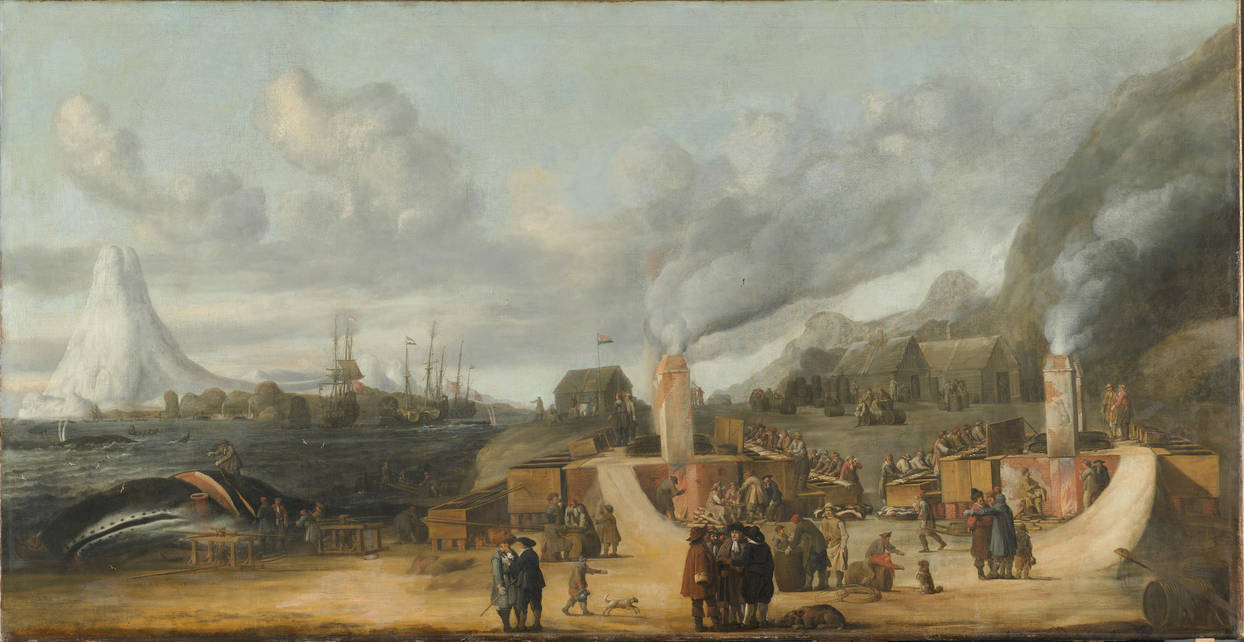
British whaler Harriet visited Bay of Islands, New Zealand in 1836

Arrived on 3 November, barque, name master Christie, tonnage 300 tons, belonged to London, England, active in the sperm oil fishery, clean ship.

Source

Accounts and papers of the House of Commons: seventeen volumes. Colonies; Emigration; Australia; Prisons, West Indies;etc. Session 15 November 1837-16 August 1838. Vol. XL. 

Scottish whaler Saint Andrew in 1821

Type ship. Master Shields. Tonnage 313 tons. Built at Shields in 1809. Owner Union Whale Fishing Company. Port where registered Aberdeen.

Source

List of the shipping registered in the different ports of Scotland. Glasgow, 1821. 

Japanese cargo ship (ex-Uyo Maru 1932-1940) Shinanogawa Maru 1940-1942

©Warshipsresearch.blogspot.com
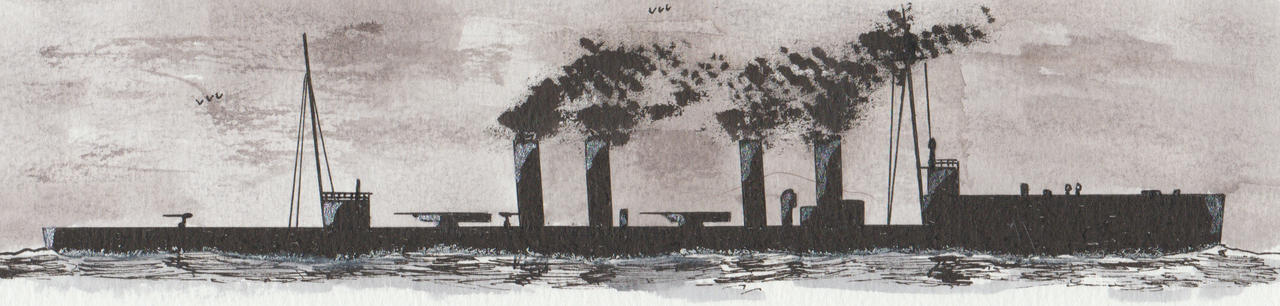
Similar Akiura Maru, Huzikawa Maru, Kazuura Maru, Kinugawa Maru, Kumagawa Maru, Mogamigawa Maru, Sinanogawa Maru and Tenyo Maru. Call sign JBTI. Laid down by Mitsubishi Jukoygo K.K., Nagasaki, Japan on 20 November 1932, launched on 24 June 1933, completed on 31 January 1934, requisitioned by the army as a troop transport IJA ship No. 920 on 18 November 1941 and sunk after an American air attack off Shortland Islands on 14 November 1942. Gross tonnage 7,503 tons, under deck 6,069 tons, netto tonnage 5,489 tons and as dimensions 436.4 x 58.5 x 32.8 x 9 (light)-26 (loaded) feet. Diesel propulsion, single screw, horsepower 840 nhp, oil bunker capacity 2,400 tons, range 50,000 nautical miles/13.5 knots and speed 13.5 (normal cruising)-16 (maximum) knots. 

Portuguese transport Nossa Senhora da Nazare 1762

Charrua, mentioned in 1762.

Source

A. Marques Esparteira. Catalogo dos navios brigantinos (1640-1901). Lisboa, 1976.

Dutch East Indiaman Egelenburgh 1680

Cat, E.I.C.-chamber Hoorn, built in 1680, dimensions 115 x 25 x 12½, height above 4 feet.

Source

F.W. van Stapel. Beschrijving van de O.I. Compagnie. 

British destroyer HMS (ex-Redgauntlet 1912-1913) Laurel 1913-1921

Sistership HMS Loyal. ©Warshipsresearch.blogspot.com
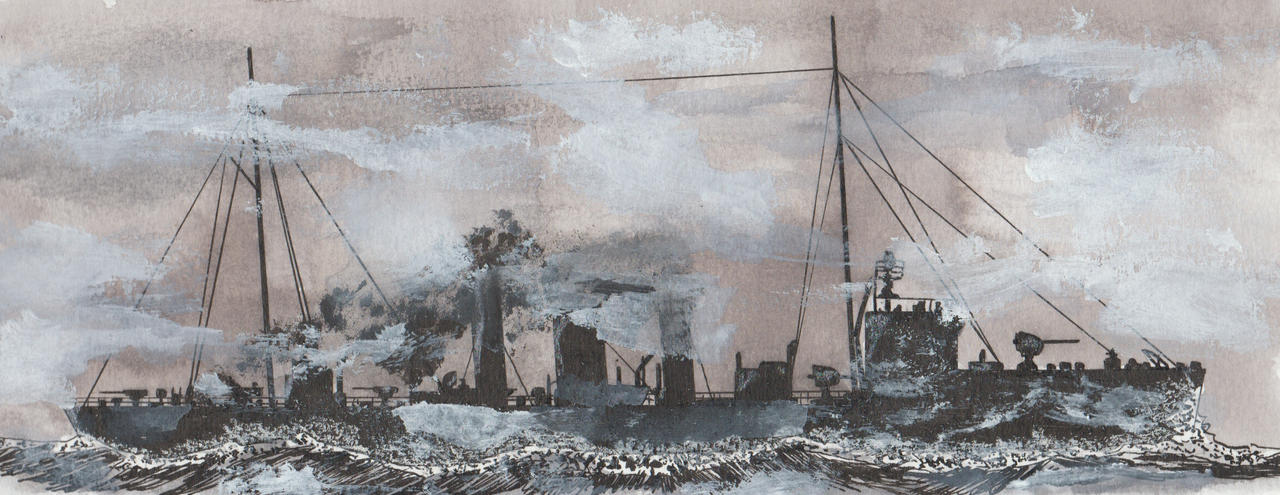
Part of Laforey-class (which was redesignated in October 1913 as L-class) preceded by Acasta-class preceded by Admiralty M-class. For the Laforey-class was the modified design of the HMS Fortune used which was slightly longer and narrower and fitted out with a clipper bow. The Laforey-class had 3 funnels with the same height and with the middle funnel thicker than the fore and aft. The Laurel and Liberty built by J. Samuel White and the Lark, Landrail, Laverock and Linnel built by Yarrow had just two funnels. Laid down by J. Samuel White&Company, Cowes, Wight on 17 August 1912, launched on 6 May 1913, completed in March 1914 and sold to be broken up on 1 November 1921. 

American whaler Catharine visited Floreana Island in 1834

According to a letter dated Floriana 1 May 1834 written by Joseph Villamil sent to the editors of the N.Y. Daily Advertiser visited the whaler Catherine of Nantucket, master Chase, Floriana on 21 May 1834.(1)

Note

1. Floreana Island or Isla Floreana or Floriana is part of the Ecuador’s Galápagos Archipelago. In the past know and Mercedes Island/Isla Mercedes or Mascarenas, Santa Maria and Charles Island. Favorite stop for whalers for fresh water and food probably resulting in the destinction of some specias like the Floreana giant tortoise.

Source

The Sailor’s Magazine and Naval Journal. Vol VI ending August 183. New York, 1834. 

American whaler Leonidas visited Floreana Island in 1834

According to a letter dated Floriana 1 May 1834 written by Joseph Villamil sent to the editors of the N.Y. Daily Advertiser visited the whaler Leonidas of Bristol, master Cleaveland, Floriana on 21 May 1834.(1)

Note

1. Floreana Island or Isla Floreana or Floriana is part of the Ecuador’s Galápagos Archipelago. In the past know and Mercedes Island/Isla Mercedes or Mascarenas, Santa Maria and Charles Island. Favorite stop for whalers for fresh water and food probably resulting in the destinction of some specias like the Floreana giant tortoise.

Source

The Sailor’s Magazine and Naval Journal. Vol VI ending August 183. New York, 1834. 

Monday, 26 January 2026

Dutch ocean going patrol vessel Zr.Ms. Friesland (P842) 2009-

Of the Holland-class, consisting of the Holland, Zeeland, Friesland and Groningen. Laid down by the Damen Group on 26 November 2009, launched on 4 November 2010 and commissioned on 22 January 2013. Netherlands-flagged, MMSI 245838000 and call sign PAVC. Displacement 3.750 (full load) tons and as dimensions 108,4 x 16 x 4,55 metres or 355.8 x 52.6 x 14.11 feet. Speed 21,5 knots. Armament consists of 1-7,6cm Oto Melara Super Rapid, 1-3cm Oto Melara Martin WE, 2-12,7mm/0.50 Oto Melara Hitrole NT and 6-7,62mm FN MAG machine guns and 1 NH90 helicopter. 

German base ship Pelagos in early February 1942

Report dealing with the available repair ships, base ships and shipyards in early February 1942 mentioned the base ship Pelagos which was a former Norwegian whale factory ship lying at Narvik, Norway. Fitted out with an expanded workshop but lacking personnel. In Germany was around 30 men available on call. A letter dated Berlin 5 November 1942 2308/42 mentioned her tank capacity heating oil 6,709 M3, V.f.t.oil 143 M3 and diesel oil 214 M3. (1)

Note

1.Launched as cargo ship Athenic by Harland&Wolff, Belfast, Northern Ireland with yard number 341 for account of Shaw Savill&Albion on the shipping line London-Wellington, New Zealand on 17 August 1901, completed on 23 January 1902, commissioned on 14 February 1902, bought by the Norwegian Hvalfangersk Pelagos A/S and converted into a whale factory ship in 1928, captured by the German commerce raider Penguin on 15 January 1941, sunk at Kirkenes, Norway in 1944, salvaged and repaired and again active as whale factory ship until broken up in 1962.

Source

Bundesarchive RM 7-223. 

Bulgarian destroyer George Dimitrov according to a C.I.A. report dated 13 November 1952

An item reported the destroyer George Dimitrov , ex Nezamobenik, Zante and Zhelyeznyakon. Built at Nikolayev =Mykolajv, Ukraine between 1917-1923. Displacement 1,323 ton and as dimensions 93 x 9.3 x 3 metres. Turbine propulsion with 29,000 hp horsepower. Fuel bunker capacity 290 ton. Speed 30 knots but now probably less. Crew numbered 161 men. Armament consisted of 4-10cm guns, 2-4.5cm guns, 1-3.7cm machine gun, 3-13mm machine guns, 12-45cm torpedo tubes and 45 heavy mines. Added was the remark that the Soviet Union handed over to Bulgaria an Optini destroyer to replace the Nezamoshnik with the specifications: speed 40 knots, displacement 1,570 ton and as armament 3-12.7cm guns. 4-45mm guns, 3-37mm guns, 8-53.3mm torpedo tubes and 60 mines.

Source

C.I.A. report no. CIA-RDP83-00415RO12700120006-1

Dutch air-defence and command frigate Hr.Ms. Evertsen (F 805) 2001-

Netherlands-flagged, MMSI 244942000 and call sign PAEU. Part of De Zeven Provinciën-class preceded by Tromp- and Jacob van Heemskerkc-classes. In November 2023 was decided to cancell her successort the Future Air Defender (FuAD), ajoint German-Dutch project. Laid down by Damen Schelde Naval Shipbuilding on 6 September 2001, launched on 19 April 2003 and commissioned on 10 June 2005. 

Construction status of the German submarine U 1175 in July 1944

German submarine U 995 type VIIC/41 (1942)-1945. Museum ship at Kiel, Germany 1 May 2016

List of planning with deadlines for new construction of warships by German shipyards in July 1944. Type VIIC/41. Yard Danziger Werft, Germany. Yard number 147. Date building ordered 16 July 1942. Date completion open. Remarks none.

Source

Deutsches Historisches Institut Moska. Records 500 findbuch 12453-file 147. 

The Chinese river gunboat Li Chieh in November 1927

The American consul at Harbin, China G.C. Hanson sent with his report dated 29 November 1927 a list dealing with the Chinese gunboats on the Sungari River. It included the Li Chieh. Used for patrolling between Harbin and Lahasus. Reported to be in fair condition as far as cleanliness is but did not cruise much often caused by a chronic lacking coals and other supplies which was due to lacking the necessary finances. The gunboats seemed to have little success in preventing brigands attacking passing steamships and junks arrriving too late on the place of delict. Displacement 266 tons. Built of steel. Armament 7: 2-2.5lb quick firing guns, 1 mortar, 4 Mai-ke-sin (Maxim?) machine guns. Former nationality German. Former name unknown. Horsepower unknown.

Source

National Archives. Record Group 64: Records of the National Archives and Records Administration. Series: Records of the Department of State Relating to Internal Affairs of China. File Unit. Military Affairs and the Army: Army Maneuvers: 893.21 - 893.215 THRU 

Dutch unmanned surface vehicle Inspector 90

According to the website of Exail (https://www.exail.com/product/inspector-90-unmanned-surface-vehicle): “The USV Inspector 90 is a versatile drone platform powered by hydrojet propulsion, offering multiple operation modes including autonomous, remote control, and onboard steering. Its high performance and precision make it an effective tool for protection missions, routine operations, Mine Countermission (MCM), and Rapid Environmental Assessment. Its open design allows for the integration of a wide range of payloads.” OT&E. GV939211G

American whaler Abigail visited Floreana Island in 1834

According to a letter dated Floriana 1 May 1834 written by Joseph Villamil sent to the editors of the N.Y. Daily Advertiser visited the whaler Abigail of New Bedford, master Clark, Floriana on 9 May 1834.(1)

Note

1. Floreana Island or Isla Floreana or Floriana is part of the Ecuador’s Galápagos Archipelago. In the past know and Mercedes Island/Isla Mercedes or Mascarenas, Santa Maria and Charles Island. Favorite stop for whalers for fresh water and food probably resulting in the destinction of some specias like the Floreana giant tortoise.

Source

The Sailor’s Magazine and Naval Journal. Vol VI ending August 183. New York, 1834. 

American whaler Chariot visited Floreana Island in 1834

According to a letter dated Floriana 1 May 1834 written by Joseph Villamil sent to the editors of the N.Y. Daily Advertiser visited the whaler Chariot of Warren, master Luther, Floriana on 29 April 1834.(1)

Note

1. Floreana Island or Isla Floreana or Floriana is part of the Ecuador’s Galápagos Archipelago. In the past know and Mercedes Island/Isla Mercedes or Mascarenas, Santa Maria and Charles Island. Favorite stop for whalers for fresh water and food probably resulting in the destinction of some specias like the Floreana giant tortoise.

Source

The Sailor’s Magazine and Naval Journal. Vol VI ending August 183. New York, 1834.

Dutch fast boarding craft FRISC RHIBC-15

Netherlands-flagged, MMSI 244444000 and call sign PAPO. FRISC=Fast Raiding, Interception and Special Forces Craft. Rigid-hulled inflateble boat. 

American motor tug Chaplain (1952) in 1966

Active on the Great Lakes system. Operated by Spentonbush Fuel Transport Service. Homeport New York, USA. Built in 1952. Steel made. Net register tonnage 90 tons. Dimensions 85 x 23 x 10 (light)-10.9 (laoded) and as highest fixed point above water (=pilothosue) 15 feet. Horsepower 900 hp.

Source

Corps of Engineers US Army. Transportation Lines on the Great Lakes System 1966. Transportation series 3. 

German minesweeping activities along east Black Sea coast continued according to the German War Diary of Admiral Black Sea dated 1 October 1942

An item reported that the German forces continued with the mine sweeping off Mariupol (Ukraine), Yeisk (Jejsk, Russia) and Sevastopol (Crimea).

Source

German War Diary of Admiral, Black Sea 1 1 October-31 December 1942. Published by Department of the Navy. Washington, 1955. 

British destroyer HMS Tornado 1917

Satyr. ©Warshipsresearch.blogspot.com
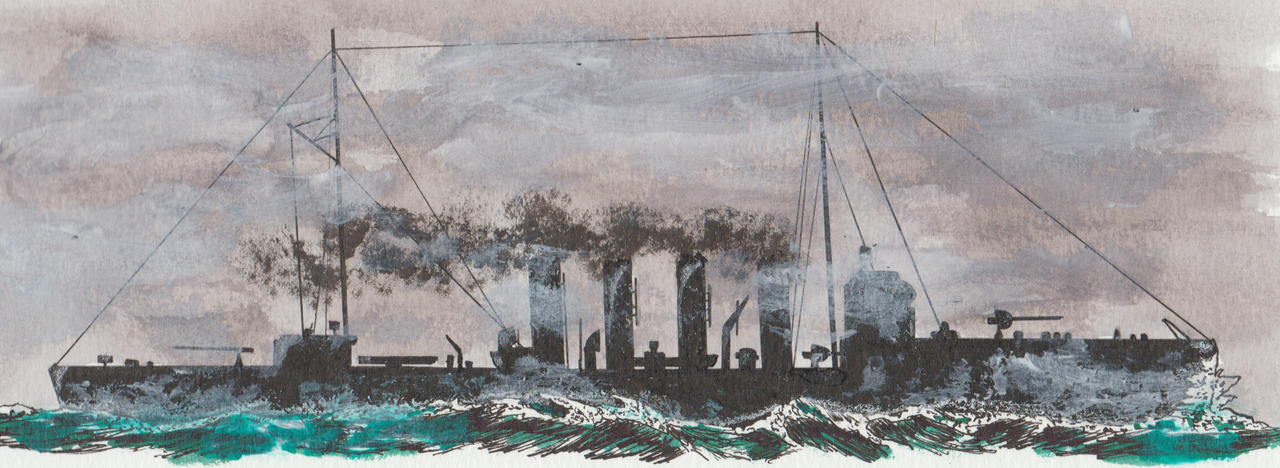
Part of Admiralty R-class preceded by Admiralty M-class succeeded by S- and Admiralty V-classes. Under 8th War Programme ordered in March 1916. Launched by Alexander Stephen and Sons, Linthouse, Scotland on 4 August 1917, completed in November 1917 and sunk after running into a German minefield and striking 2 mines on 23 December 1917. Amongs her tasks was the so-called Beef Run convoys between the Netherlands and England and she waited near the Maas Light Buoy when the accident happened. 

Dutch East Indiaman America 1673

Ship, E.I.C.-chamber Hoorn, built in 1673, dimensions 160 x 39 x 18, height above 7½ feet.

Source

F.W. van Stapel. Beschrijving van de O.I. Compagnie. 

German mines found ashore at [Henichesk, Ukraine according to the German War Diary of Admiral Black Sea dated 1 October 1942

An item reported that the same day four mines belonging to a German minefield were found ashore at Genichesk [Henichesk, harbour along the Sea of Azov, Ukraine].

Source

German War Diary of Admiral, Black Sea 1 1 October-31 December 1942. Published by Department of the Navy. Washington, 1955. 

Sunday, 25 January 2026

Russian destroyer Kapitan Saken 1906-1930s

Kapitan Saken. ©Warshipsresearch.blogspot.com

Modernized design of the German built Vsadnik-class, often considered to be part of the Dobrovolets-class which included several small classes preceded by Leytenant Pushchin-class succeeded by Derzyky-class. Laid down by Naval Yard, Nikolayev, Ukraine on 16 September 1906, launched in September 1907, commissioned on 13 October 1909, interned in Bizerte, French Tunisia on 29 December 1920 and broken up early 1930s. Originally to be named Leytenant Pushchin but in March 1907 was decided otherwise. Part of the Black Sea Fleet. 

Dutch East Indiaman Ipesteyn 1671

Fluyt, E.I.C.-chamber Hoorn, built in 1671, dimensions 115 x 23 x 11¾ feet.

Source

F.W. van Stapel. Beschrijving van de O.I. Compagnie. 

Portuguese galleon Sao Martinho 1588

Also called San Martin, mentioned as part of the Armada 1588, 1000 tons, 48 guns, 477 men.

Sources

W.A. Knoops and F.Ch. Meijer. De Spaanse Armada. Amsterdam, 1988.

Ignacio de Costa Quintella. Annaes de Marinha Portugueza, deel 2. 

Yugoslav destroyer Dubrovnik 1930-1941, Premuda 1942-1943, TA32 1943-1945 (1950)

©Warshipsresearch.blogspot.com

Also called a flotilla leader. Ordered in 1929, laid down by Yarrow Shipbuilders, Glasgow, Scotland on 10 June 1930, launched on 11 October 1931, commissioned in May 1932, captured by Italy on 17 April 1941, renamed as Premuda commissioned in February 1942, captured by Germany on 9 September 1943, renamed TA32 and commissioned on 18 August 1944, scuttled at Genoa, Italy on 24 April 1945, salvaged and broken up in 1950. 

France intend to blockade La Gueira according to the Dutch newspaper Soerabaijasch handelsblad dated 24 January 1906

An item reported that the French squadron probably would blockade the harbour town La Gueira [La Guiara, Venezuela].(1)

Note

1. Relations between France and Venezuala were disturbed dealing with the repayments of the debts to France, Netherlands and Spain; the major part to France. 

British design for a 33 knots 950 tons Dutch destroyer around 1923

British HMS Amazon. ©Warshipsresearch.blogspot.com

Dutch Hr. Ms Evertsen. Maritiem Museum Rotterdam. 

Detail of the Panorama Burgerhout, painted by Adolf Bock.

Predesign for the Dutch Admiralen-class of 8 ships built in two batches, preceded by Wolf-class succeeded by Gerard Callenburgh-class, based on design of the British prototypes HMS Ambuscade and Amazon. Dimensions 269.0 (over all) x 27.0 x 16.0 x 8.9 feet. Design of Thornycroft. Admiralen-class speed 36 knots, standard displacement 1,337 tons and as dimensions 321.6 x 31.3 x 9.9 feet.

Source

Het Scheepvaartmuseum, Amsterdam, Netherlands drawing S.2175(3683)